
5 Reasons Your Nail Extensions Are Lifting at the Free Edge
.png)
5 Reasons You're Getting Lifting at the Free Edge — And How to Fix It
Lifting at the free edge is one of the most common frustrations in the nail industry — and the truth is, it's rarely just one thing. Whether it's your prep, product choice, your client's nail health, or even what happens after they leave the salon, there are five distinct possible causes. Understanding which one applies to your client is the key to fixing it for good.
1. Dehydration & Nail Curling
As the nail plate grows toward the free edge it becomes less flexible and more dehydrated. This causes the nail to curl away from the product — and when the nail curves, it pulls the enhancement with it, leading to lifting at the free edge.
The good news is that this is one of the easiest causes to address, and your clients can start fixing it at home straight away.
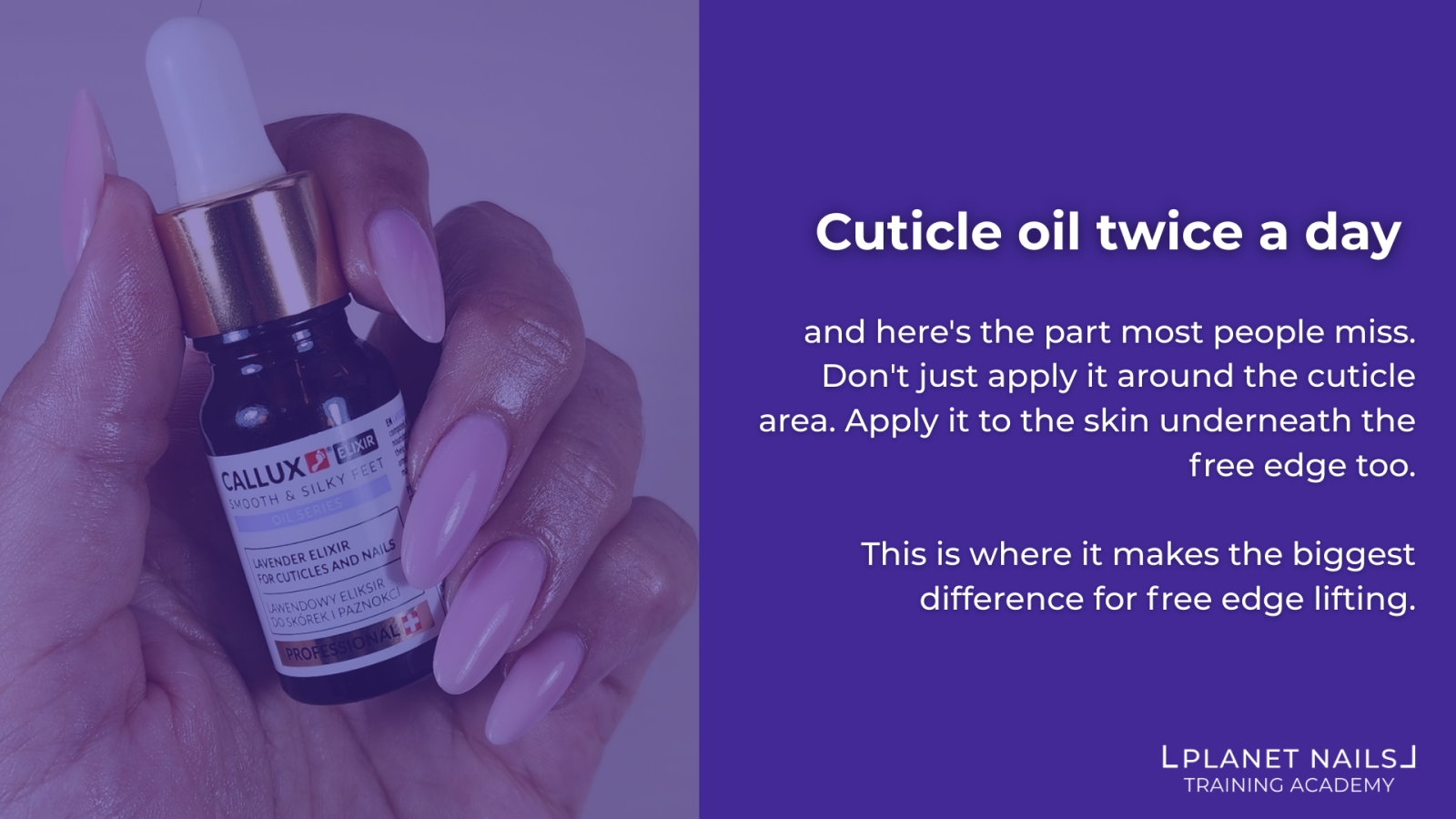
Pro Tip: Recommend cuticle oil twice daily — and here's the part most people miss. It's not just about applying it around the cuticle area. Clients need to apply it to the skin underneath the free edge too. This is where it makes the biggest difference for free edge hydration. Keep the nail flexible and it's much less likely to curl away from the product. Results can be seen in as little as two weeks — your client could be saying goodbye to free edge lifting by their very next infill appointment.
2. Thin Nails Can't Hold Product
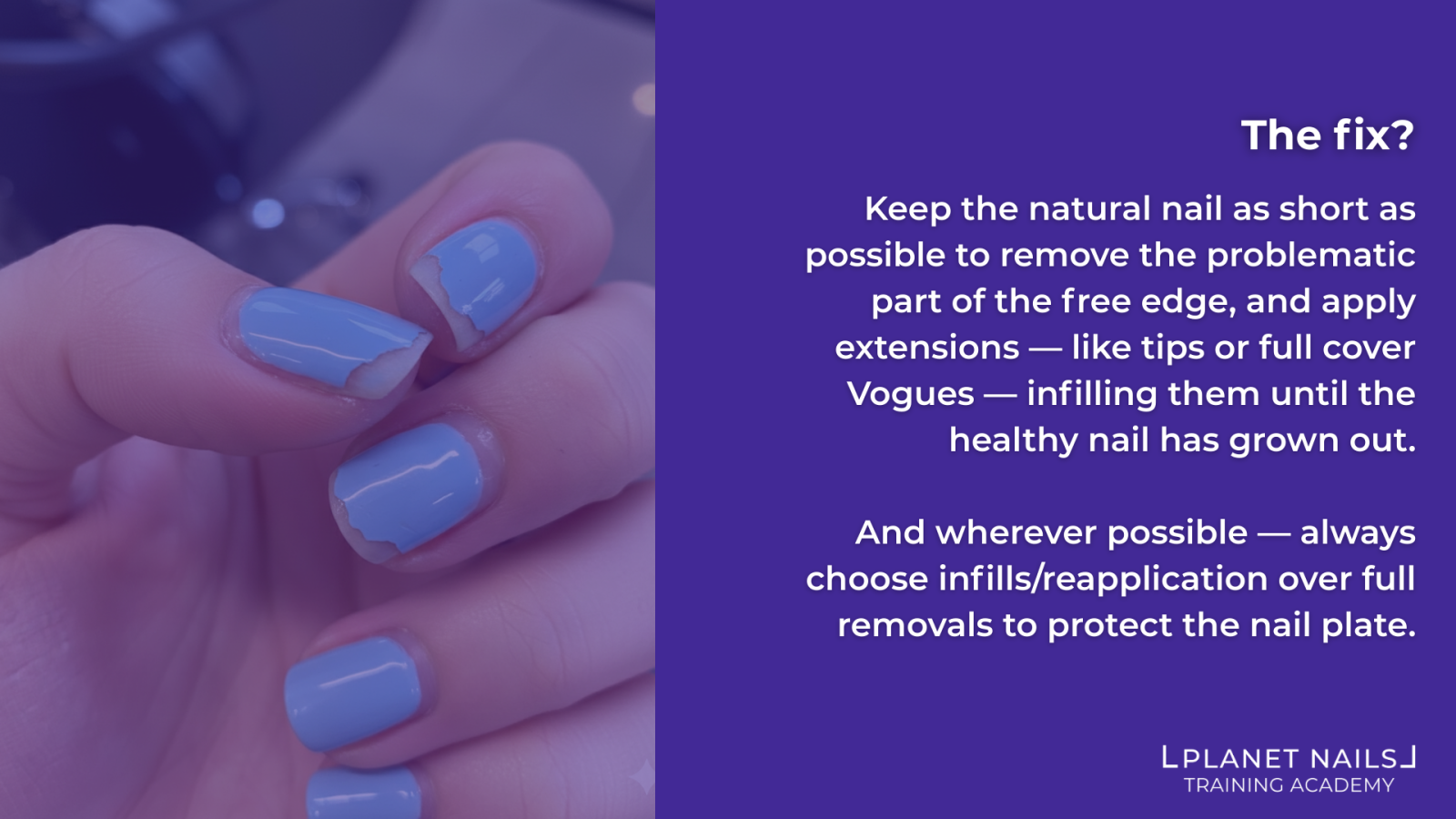
Every time we file or buff the nail plate, we're removing layers. And once we get too far down, we reach a layer of the nail plate that simply cannot support product adhesion. Nail products are designed to adhere to the outermost top layers of the nail plate only — go beyond that and you're working against the chemistry.
This happens more easily than people realise. Here's how it can creep up:
- A client who is soaking off and reapplying every 3–4 weeks means the nail at the free edge can become over-filed very quickly.
- If a client regularly experiences lifting at the free edge and you're filing the lifting away each appointment, that area accumulates damage over time.
It's worth remembering that the nail plate takes approximately 4 to 8 months to fully replace itself from the root to the free edge. So, depending on how much of the nail is damaged, the damage isn't quick to undo — but it can be managed.
Pro Tip: Keep the natural nail as short as possible to remove the problematic portion of the free edge and apply extensions such as tips or full cover soft gel extensions, infilling them until the healthy nail has grown out. And wherever possible — always choose infills over full removals to protect the nail plate and avoid compounding the issue.
3. Prep Is Everything — Including the Free Edge
Even when your prep feels thorough, the free edge is easy to overlook. It acts like a small shelf that collects oils, dust, dead skin cells, and product residue. Standard nail plate prep — buffing, dehydrating — doesn't always reach the very edge. So even when the rest of the nail is perfectly prepped, the free edge can remain contaminated.
The fix is simple: give the free edge its own dedicated prep step.
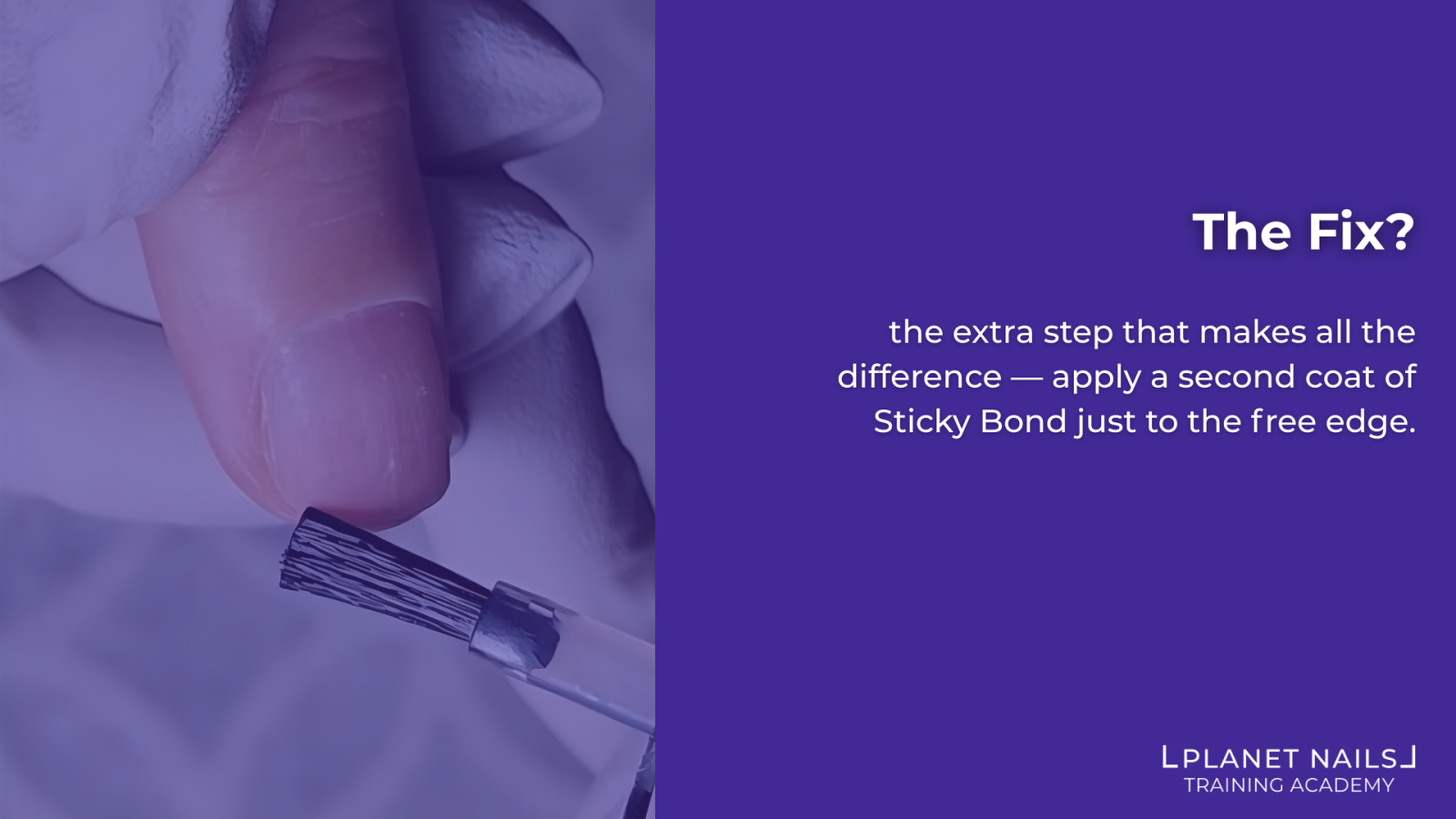
Pro Tip: After your regular prep, take a lint-free wipe with The One and specifically clean the underside of the free edge. Apply Sticky Bond to the nail as normal, wait for it to dry. Then apply a second coat of Sticky Bond just to the free edge before proceeding. Sticky Bond acts like double-sided tape, giving the product extra grip right where lifting is most likely to happen. Small extra step — big difference in retention.
4. Hard Curing Products on Flexible or Damaged Nails
Harder curing builder gels are rigid products — that's what gives them their strength and structure. But rigid products don't play well with soft, flexible, thin, brittle, or damaged nails. When you apply a rigid product to a nail that wants to flex, you've got a compatibility mismatch. The nail bends, the product doesn't, and lifting at the free edge is the result.
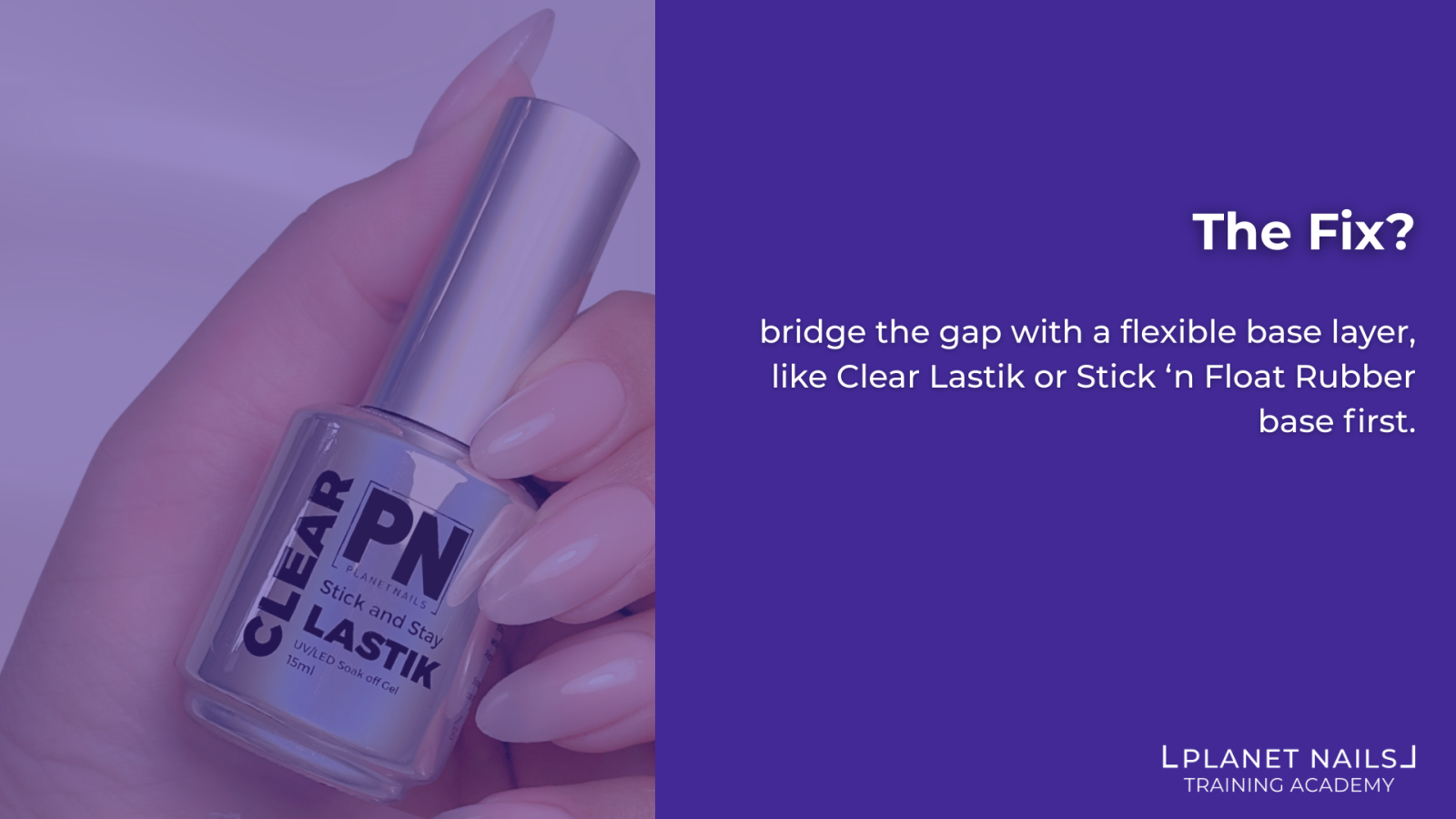
Pro Tip: Bridge the gap with a flexible base layer first. Products like Lastik or Stick 'n Float rubber base are designed to move with the natural nail while still giving the harder builder gel something compatible to bond to. Apply a thin layer of flexible base, cure it properly, then apply your builder gel as normal. The flexible base absorbs the flex, so the harder product doesn't have to — making a significant difference for clients who are prone to lifting in this area. These two products work under Acrylic enhancements in the exact same way.
5. Your Client's Environment & Daily Habits
Even the most perfectly applied enhancements can be compromised by what a client's hands are exposed to every day — and this is one of the most overlooked causes of free edge lifting.
There are two main environmental culprits:
- Water exposure: Prolonged contact from swimming, dishwashing, or frequent hand washing can gradually work its way between the enhancement and the natural nail, weakening the bond at the free edge over time.
- Harsh chemicals: Household cleaners, sanitisers, and even some beauty products can break down the molecular bond of the enhancement, leading to premature lifting.
And there's one more habit worth raising with your clients:
- Stretching service intervals: Leaving too long between infill appointments leads to service breakdown. As the enhancement grows out, there's more leverage and stress on the free edge bond — making lifting far more likely. Staying on top of appointments is one of the simplest things a client can do to protect their nails.
Pro Tip: Remind clients to wear gloves for cleaning and be mindful of water and chemical exposure between appointments. And encourage them to keep to their recommended service intervals — regular infills protect both the enhancement and the natural nail underneath.
The Wrap-Up
Lifting at the free edge doesn't always mean something went wrong during the service — but it does mean there's something worth investigating. Work through these five causes with your clients and you'll find the culprit. Great nails aren't just about how they look — they're about how they last.
Stay sharp with your prep, match your products to your client's nail type, educate your clients on aftercare, and you'll see fewer repairs and happier clients at every appointment.
Planet Nails | planetnails.com.au