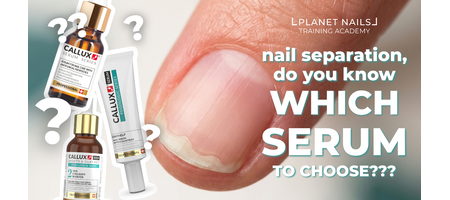
Nail separation aftercare
You've spotted nail separation, you've refused the service, and the cause is clear and not one for the doctor. So what do you send your client home with?
Planet Nails Training Academy
7 October 2026

Author: Planet Nails
26 August 2026
.png)
A closer look at Lastik, Lastik Plus, PUG, PUGGLE, Fortify and Stick 'n Float — and why the same routine can work on 19 clients and fail on the 20th.
"I use the same two products on every client, and it's only ever caused a problem once." That's a comment we hear a lot, and it's usually said in frustration, not as a boast. If your go-to routine works on 19 out of 20 clients, it's easy to assume the 20th client is the problem.
She isn't. That client's nails are simply telling you something the other 19 didn't need to.
Let's say the routine is: Stick 'n Float as the rubber base, Lastik Plus as the builder. It works consistently — until it doesn't. To understand why, it helps to understand what each product is actually doing, and why this particular combination has been holding together without primer on most clients.
Stick 'n Float is Planet Nails' highest acid-based rubber base. That acid content gives it exceptionally strong inherent adhesion — which is exactly why it performs so well on oily, sweaty, or problem nail plates. It also means that for many clients, the Stick 'n Float itself is doing some of the work that primer would normally do. That's not a reason to skip primer — it's the reason skipping it hasn't caused a visible problem yet on 19 out of 20 clients.
When the 20th client turns up with a problem, there are three possible reasons — and it may be one, or it may be all three:
Here's how the core PN rubber base and builder range actually differs — so the choice isn't guesswork:
| Product | Type | Step | Flexibility | HEMA-free | Removal | Wear time | Best suited to |
|---|---|---|---|---|---|---|---|
| Stick 'n Float | Rubber base only — no builder properties | Step 3 — Base | Flexible | Yes | Soak-off | — | Oily, sweaty, or problem nail plates. Highest acid content of the PN rubber bases. Not the default recommendation for every client. |
| Lastik | Flexible rubber base + builder hybrid | Step 3 — Base, Step 4 — Build, or both | Flexible | No | Soak-off | ~3 weeks | The recommended starting point for most clients. Ideal for thin, flexible, brittle, or short nails. Not suitable for medium or long length builds — the flexibility won't support the length. |
| Lastik HF | Flexible rubber base + builder hybrid — HEMA-free | Step 3 — Base, Step 4 — Build, or both | Flexible | Yes | Soak-off | ~3 weeks | Confirmed HEMA sensitivity. Largest molecular weight adhesion molecule of the three rubber bases — lowest risk for sensitive clients. Same flexibility and versatility as Lastik. |
| Lastik Plus | Builder gel with built-in base adhesion properties | Step 4 — Build | Some flexibility (firmer cure) | No | Soak-off | ~3 weeks | Clients needing more structure and durability on short nails, or those wanting soak-off on medium length nails. Not suitable for thin, brittle, or very flexible nails. Not recommended as a rubber base under other systems. |
| PUG | Hard gel, jar — self-levelling builder | Step 4 — Build | Rigid | Yes | File-off | Up to 4 weeks | Overlays, tip overlays, and sculpting on any nail length. Full control with a separate brush. More durable than soft gel options. |
| PUGGLE | Hard gel, bottle — fluid self-levelling builder | Step 4 — Build | Rigid | Yes | File-off | Up to 4 weeks | Can be used on any client as a hard gel builder in the same way as PUG. The self-levelling formula makes a no-file or minimal-file finish possible on clients whose nail shape allows it — but filing is always an option when correction or shaping is needed. |
| PUG Fortify | Hard gel, thixotropic — non-self-levelling | Step 4 — Build | Rigid | Yes | File-off | Up to 4 weeks | Any client or nail tech. Stays where you place it and only moves when you work it with the brush — great for techs who need more working time. Always requires filing to finish. Ideal for armouring, restoration, dual forms, and sculpting. |
PUGGLE's growth reflects a genuine shift toward hard gel, and it's easy to see why. It offers file-off strength and durability in a fluid, brush-on bottle format — and for technicians who are used to BIAB-style application, the familiar brush-in-a-bottle feel makes the transition to hard gel far less intimidating. That crossover appeal is a big part of why PUGGLE has resonated so strongly.
What's worth understanding is that PUGGLE can be used on any client as a hard gel builder — for overlays, tip overlays, infills, and sculptures — in the same way you would reach for PUG or Fortify. Its self-levelling formula makes a no-file or minimal-file finish possible when the client's nail shape allows it. When shape correction or filing is needed, you file as normal. The no-file result is a bonus the formula makes possible, not a requirement for choosing it.
One of the most common points of confusion is when to reach for a soft gel versus a hard gel — and the answer is less about product preference and more about what the client's nails actually need.
For short nails needing flexibility: Lastik is the go-to. It flexes with the nail, supports thin and brittle plates, and works as a rubber base, a builder, or both. If more structure is needed on a short nail and the client still wants soak-off, Lastik Plus is the step up — but only if the nail plate can handle a firmer cure. For short nails needing hard gel durability, PUG, PUGGLE, or Fortify all work — the choice comes down to application style and finish preference.
For medium to long nails: Lastik's flexibility becomes a limitation — it won't support medium or longer length builds. Lastik Plus handles medium length soak-off builds. For anything requiring more durability, or for longer extensions, PUG, PUGGLE, or Fortify give you the hard gel strength those lengths need.
On wear time: soft gel systems — Lastik, Lastik HF, Lastik Plus — generally wear to around the three week mark, and infills at three weeks are recommended. Hard gel systems — PUG, PUGGLE, Fortify — can stretch to four weeks on the right client, though individual wear time always varies.
Twenty clients, twenty nail plates. The routine that works for most of them is a great default — not a rule that overrides what any individual client's nails are telling you.
Why did skipping primer only cause a problem for one client out of many?
Stick 'n Float has a high acid content that gives it exceptionally strong inherent adhesion — stronger than other rubber bases in the PN range. This means it provides some of the adhesion that primer would normally add, which is why skipping primer hasn't caused visible problems on most clients. But not every nail plate responds the same way, and that 20th client is the one whose nail plate needed that extra step. Primer goes before the rubber base on every client — not because everyone shows lifting without it, but because you can't predict who will.
What's the difference between the three PN rubber bases?
Lastik is the recommended starting point for most clients — a flexible rubber base and builder hybrid that works at Step 3, Step 4, or both. Stick 'n Float is a rubber base only (no builder properties) with the highest acid content of the three, making it the strongest option for oily or sweaty nail plates — but not the default for everyone. Lastik HF is the HEMA-free version of Lastik, with the largest molecular weight adhesion molecule of the three, making it the least likely to cause a reaction in sensitive clients. None of these are interchangeable — each has a specific role and a specific client type it serves best.
What's the difference between Lastik and Lastik Plus?
Lastik is a flexible rubber base and builder hybrid — ideal for thin, brittle, flexible, or short nails because it moves with the nail rather than against it. Wear time is around three weeks. Lastik Plus is a builder gel with built-in base adhesion properties that cures harder and more firmly, giving more structure and durability. It suits clients who need that extra firmness on short to medium nails and still want soak-off removal. It is not suitable for very thin, brittle, or flexible nails, and is not recommended as a rubber base under other systems.
Can PUGGLE only be used on clients with perfect nails?
No. PUGGLE can be used on any client as a hard gel builder — for overlays, tip overlays, infills, and sculptures — in the same way you would use PUG or Fortify. Its self-levelling formula makes a no-file or minimal-file finish possible when the client's nail shape allows it. When shape correction or filing is needed, you file as normal. The no-file result is a bonus, not a requirement for choosing it.
Is PUG Fortify only for experienced technicians?
No. Fortify is suitable for any nail technician. Because it doesn't self-level, it stays where you place it and only moves when you work it with the brush — which actually gives techs more working time and control compared to faster self-levelling gels. The key difference is simply that Fortify will always need to be filed to finish. There is no no-file result with Fortify. That's not a difficulty level — it's just how the product works.
Is PUGGLE a replacement for PUG?
No. PUGGLE and PUG complement each other. PUGGLE's brush-on bottle format and fluid self-levelling consistency suits techs who prefer that application style. PUG from the jar gives more hands-on control with a separate brush, better suited to longer sculptures and high-structure builds. Both are hard gel, both file off, and both can be used across a wide range of clients and services.
You've spotted nail separation, you've refused the service, and the cause is clear and not one for the doctor. So what do you send your client home with?
Planet Nails Training Academy
7 October 2026

If the same routine works on 19 clients and fails on the 20th, is the product the problem — or the nail plate? A closer look at the PN Gel Products and how to choose the right system for the client in your chair.
Planet Nails
26 August 2026

14 August 2026

14 August 2026


