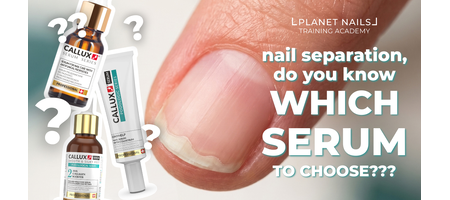
Nail separation aftercare
You've spotted nail separation, you've refused the service, and the cause is clear and not one for the doctor. So what do you send your client home with?
Planet Nails Training Academy
7 October 2026

Onycholysis, often called nail lifting or nail separation, is when the nail plate separates from the nail bed. It can look like a minor cosmetic issue, but left unmanaged it can lead to discomfort, infection and longer term nail health problems.
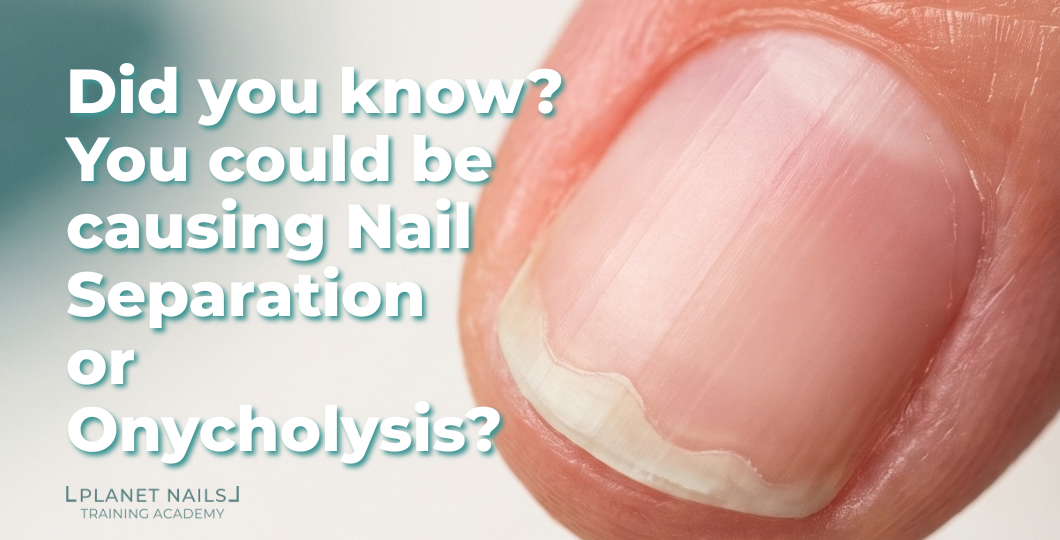
As nail techs, we're often the first to spot it. Here's what causes it, what to look for, and how to protect your clients' nails in the chair.
Onycholysis happens when the bond between the nail plate and the nail bed is disrupted. The separation usually starts at the free edge and works back toward the cuticle, showing as a white or yellowish area where the nail has lifted.
It can affect one nail or several. The gap it creates can collect debris and moisture, which raises the risk of infection.
There's rarely just one cause. It helps to think of them in three groups: what happens in the salon, what happens at home, and what's happening in the body.
Heat spikes are avoidable. Apply each product at its recommended layer thickness, and teach clients to pull their hand out of the lamp if they feel heat, then return it once it settles.
Left unmanaged, secondary infections can develop and make things worse.
Allergies and sensitivities: If you suspect a reaction to a product, avoid it, and be cautious with other common allergens. Some clients react to essential oils such as tea tree, so check before recommending anything that contains them.

Once you've ruled out anything that needs a doctor, the right retail product keeps your client's nail nourished while it grows out, and keeps them connected to your salon.
Our Nail Separation Aftercare blog covers which Callux serum to reach for, starting with Onyhelp, and the home care routine to give your client.
Refer to a GP or podiatrist if there's pain, redness, swelling, discharge, an odour, green or dark discolouration, several nails affected with no clear reason, or separation that keeps coming back. Your role is to spot the early signs and point your client in the right direction.
Staying informed about conditions like onycholysis lifts the quality of every service you provide, and keeps your clients' nail health the priority.
Read the aftercare guide
You've spotted nail separation, you've refused the service, and the cause is clear and not one for the doctor. So what do you send your client home with?
Planet Nails Training Academy
7 October 2026
If the same routine works on 19 clients and fails on the 20th, is the product the problem — or the nail plate? A closer look at the PN Gel Products and how to choose the right system for the client in your chair.
Planet Nails
26 August 2026

14 August 2026
14 August 2026


